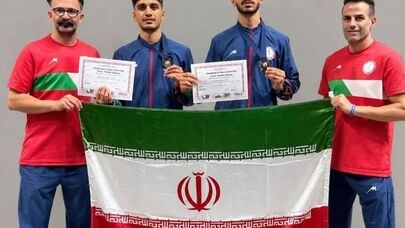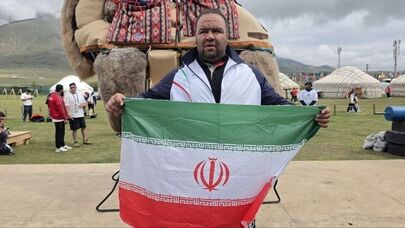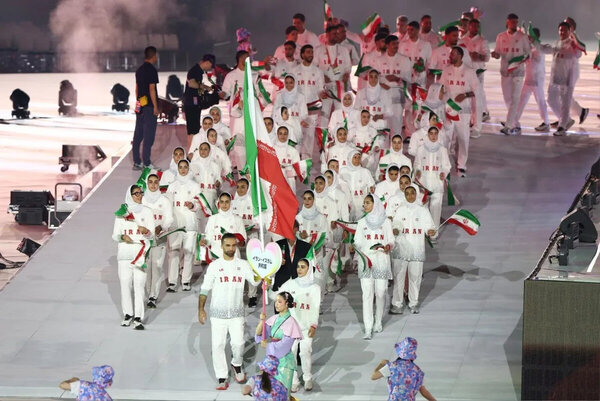
Nournews: Iran’s delegation wrapped up its campaign at the 20th edition of the Aichi-Nagoya Asian Games with 19 gold, 18 silver and 15 bronze medals, for a total of 52 medals, finishing sixth in the medal table. At first glance, the decline in the overall medal count compared with Hangzhou 2022 — where Iran won 13 gold, 21 silver and 20 bronze medals, for a total of 54 — may appear to be a setback. However, focusing only on the overall medal tally overlooks part of the Nagoya story. Iran won two fewer medals this time, but six more golds and also climbed one place in the medal standings.
This shift is more significant than it may appear in the final standings. The increase in gold medals means that some of Iran’s silver and bronze medals have been upgraded to the highest step of the podium. Therefore, Iran’s Nagoya performance cannot simply be summed up as “52 medals.” The quality of the medals and the range of sports in which Iran won medals paint a different picture, showing that Iran remains competitive in some of its traditional strongholds while also showing signs of development in several other areas.
One of the most significant developments at these Games was the strong performance of Iranian women athletes. Reyhaneh Karimi won a bronze medal in the 77kg weightlifting category, securing the first-ever Asian Games medal in the history of Iranian women’s weightlifting. The achievement was more than just another medal for Iran; it marked a milestone for the sport. Karimi finished third with a combined lift of 243kg, just three kilograms behind the runner-up.
This was not the only sign of change in Iranian women’s sport. Saghar Moradi also won gold in the women’s under-67kg category, securing the first Asian Games gold medal in the history of Iranian women’s taekwondo. Iran’s taekwondo team won four medals in total — two gold, one silver and one bronze — and also claimed the top spot in the men’s and women’s kyorugi team events.
Volleyball, meanwhile, offered a completely different picture. Iran’s national team faced Japan in the final of the Nagoya Asian Games and won 3–1 to claim the title. Winning the championship in Japan, particularly by defeating the host nation in the final, was one of the results that could carry considerable weight in assessing Iran’s performance in team sports. Before the final, Iran had defeated Pakistan 3–0, while Japan had edged China 3–2 in the semifinals.
Football, however, told a different story. Iran’s U23 team was eliminated in the group stage, with a heavy 4–1 defeat to North Korea preventing the team from advancing. Iran had been in a position to qualify before its final match. A comparison with Hangzhou also shows that the U23 team had at least reached the quarterfinals at the previous Games, whereas in Nagoya it failed to get out of the group stage.
This contrast may be the most important sporting message from Nagoya: Iran does not have a uniform performance across different sports. On one side, volleyball won the title; on the other, the U23 football team was eliminated in the group stage. A historic barrier was broken in women’s weightlifting, while women’s taekwondo secured its first-ever Asian Games gold. Alongside these achievements, wrestling, taekwondo, wushu, canoeing and other sports continued to provide a significant share of Iran’s medals.
Therefore, if Nagoya is compared with Hangzhou solely on the basis of the overall medal tally, the figure of 52 versus 54 may appear to be the main story. But the more important figure is 19 golds in Nagoya compared with 13 in Hangzhou. Iran won fewer medals overall but more golds, earning sixth place in the standings.
This result, of course, does not mean there is no need for a detailed assessment. The gap between volleyball’s success and football’s failure, or the emergence of new talent in women’s sport alongside the results of less medal-winning disciplines, shows that the delegation’s performance needs to be assessed sport by sport. Nagoya was less a one-line report card than a collection of successes, missed opportunities and signs of change in the structure of Iran’s medal-winning sports.
Perhaps the most important achievement in Nagoya was neither Iran’s one-place rise in the standings nor even the increase in its gold-medal tally. Rather, it was the growing presence of women athletes and sports that had previously played little or no role in Iran’s medal haul alongside the country’s traditional medal winners. If this trend continues in future editions, it will provide a clearer basis for judging whether a genuine change is taking place in the composition and depth of Iran’s elite sport.