At the end of September, the US economy presented a mixed picture. GDP grew at an annualized 2.2% rate in the second quarter, while consumption and investment, particularly investment in AI infrastructure, continued to support economic activity. At the same time, the labor market is losing momentum, consumer confidence has fallen to its lowest level in more than 12 years, and a broader measure of the stock market is showing greater weakness than the main index.
The latest JOLTS report showed that US job openings fell by 256,000 at the end of August to 7.079 million, below economists’ expectations and the lowest level in five months. The job-openings rate also declined from 4.4% to 4.3%. Job openings in manufacturing and construction fell during the same month.
Meanwhile, US consumer confidence fell 6.7 points in September to 81.9, its lowest level since April 2014. Households became more concerned about future business and labor-market conditions, with the share of people who believe jobs are difficult to find rising to 21.9%.
On Wall Street, the gap between the headline index and the broader market has widened. The S&P 500 remains supported by the performance of major technology companies, but the equal-weighted S&P 500 is on the verge of recording its seventh consecutive weekly decline, a rare streak previously seen in 2002 and 2022, both periods of market downturns.
But an important question arises: What role is the war playing in this economic picture?
The war’s impact should be assessed through the direct and indirect costs it imposes on the economy.
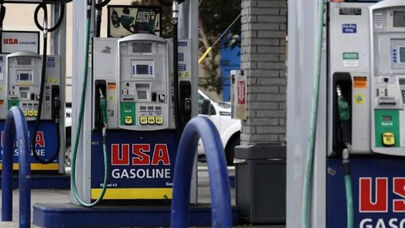
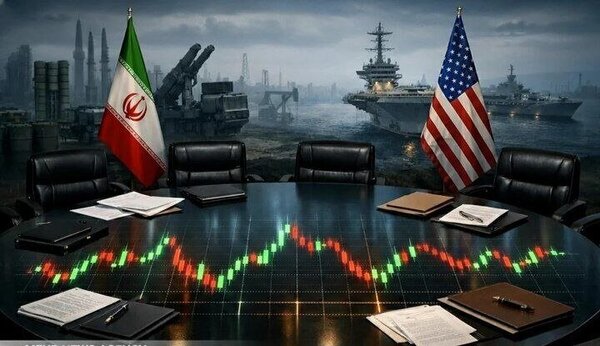
The US-Israeli war with Iran has pushed up oil and refined-product prices by disrupting regional energy and transportation markets. Reuters reported that US diesel prices reached a record high, with rising energy costs becoming a major concern for households. At the same time, disruptions to Gulf exports and continued difficulties moving energy through the Strait of Hormuz have prompted analysts to raise their 2026 oil-price forecasts. In Reuters’ September poll, the average Brent forecast rose to about $89 per barrel.
This channel through which the war affects the US economy is particularly important.
War raises energy costs, which in turn fuels higher inflation. Under such conditions, interest rates can remain higher and financing costs increase, putting direct pressure on households and businesses.
This chain becomes particularly dangerous when the labor market is simultaneously cooling.
Higher energy costs first feed directly into gasoline and diesel prices, but the effects spread to transportation, manufacturing, food and services. Households spend more on fuel and essential goods, leaving less money for other expenditures. Companies face higher input costs and a more uncertain outlook, potentially making them more cautious about hiring and investment.
Consumer-confidence data capture precisely these pressures. In September, household responses about the economy referred more frequently to prices, the cost of goods and, particularly, oil and gas. At the same time, the 30-year mortgage rate rose above 7% and, according to Reuters, has increased by more than one percentage point since the war began.
The war, therefore, has not necessarily directly targeted the US labor market; rather, it has increased the cost of running the US economy. That distinction matters.
If the labor market weakens, lower monetary pressure could help support the economy. But if the war keeps energy prices elevated and adds to inflation, the Federal Reserve’s room for maneuver becomes more limited. Even while output continues to grow, monetary policy could remain restrictive for longer.
From this perspective, the bad news for Trump is not simply the loss of 256,000 job openings. The bad news is the convergence of several trends: the labor market is losing its previous cushion, consumer confidence has fallen, energy costs have risen, and the war has complicated the outlook for inflation and interest rates.
The White House can still point to economic growth and the stock market. Second-quarter GDP recorded 2.2% growth even after revision, while heavy investment in AI and continued consumer spending are still supporting the economy.
But this very contrast makes the latest data more significant: the US economy is still growing, but the cost of that growth is rising.
The labor market has not collapsed, the stock market has not crashed, and the economy has not entered a serious recession. But the war has delivered an energy and inflation shock to an economy already dealing with high interest rates, housing costs, heavy debt and a shrinking labor-market cushion.
The central question for the Trump administration, therefore, is not whether the US economy has collapsed today. It is whether the US can absorb the cost of war and expensive energy while maintaining the image of a strong and stable economy presented by the White House.
September’s data do not provide a final answer. But they clearly show a growing gap between the picture of the US economy Trump presents from political platforms and the pressures emerging in the labor market, household budgets and beneath the surface of financial markets. That gap, the article argues, reflects the US president’s attempt to project an image of victory while placing greater pressure on the daily livelihoods of Americans.