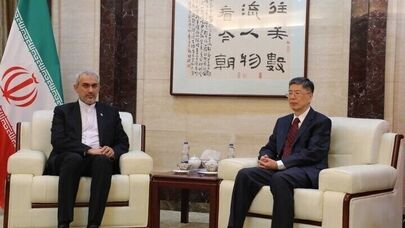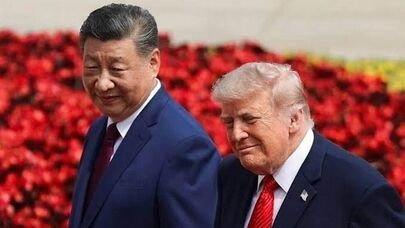
Xi Jinping’s visit to the United States from September 22 to 24, 2026, after more than a decade, was in itself a significant event in relations between the world’s two major powers. Xi’s meeting with Donald Trump on September 23 came amid a range of longstanding disputes, from trade and advanced technology to Taiwan and artificial intelligence. Despite the warm appearance of the ceremony, most of these disputes remained unresolved. The existing trade agreement was extended only for a limited period, while assessments following the meeting pointed more to “managing competition” than ending it.
For Tehran, however, the significance of the summit lay elsewhere: Iran entered the agenda of Trump and Xi’s direct discussions. That development alone is enough to view Xi’s recent visit not merely through the lens of China-U.S. relations, but from the perspective of Iran’s position in a new triangle — one side of which is Tehran-Washington relations, the second is Tehran-Beijing relations, and the third is direct Washington-Beijing discussions over Iran.
From Rejecting the Seven-Day Plan to Continued Bargaining
This triangle is taking shape at a sensitive moment in the Iran-U.S. relationship. On September 24, Iran presented a seven-day proposal that, if Tehran’s conditions were met, could have led to the normalization of maritime transit through the Strait of Hormuz and the launch of a broader process to reduce tensions. Trump rejected the proposal on September 25, and for a time it appeared that the diplomatic track had once again come to a halt.
Developments in the days that followed, however, offered a more complicated picture. On September 28, Qatari mediators delivered Washington’s response to Abbas Araghchi in Doha. A Reuters report on September 30 indicated that one of the main points of disagreement now concerns the sequencing of reciprocal steps — namely, what action Iran and the United States should take, at what stage, and in response to which measure by the other side.
This does not mean an agreement is close. Trump has simultaneously denied reports that Washington offered concessions such as sanctions relief or the release of Iranian funds, while the United States has continued its economic and sanctions pressure. On September 28, Washington also imposed new sanctions on networks and companies in several countries, including China, accusing them of cooperating with Iran’s military programs.
What is emerging, therefore, is not “imminent peace,” but the simultaneous pursuit of diplomacy and pressure. And it is precisely at this point that China becomes more important.
China Is Neither an Unconditional Ally of Iran Nor an Ally of the United States
Some domestic analyses of Tehran-Beijing relations have at times reduced the relationship to a simple equation: the greater the tensions between China and the United States, the greater Iran’s opportunity. The reality is more complicated.
China has important political and economic ties with Iran, but it is also one of the world’s largest economies, a major energy importer from the Persian Gulf, and a country with extensive relations with the United States, Saudi Arabia, the United Arab Emirates and other regional economies.
For Beijing, stability in the Persian Gulf, the security of energy flows and preventing the spread of war are also part of its national interests. That is why China can defend its relations with Iran while simultaneously calling for negotiations between Tehran and Washington and a reduction in tensions in the Strait of Hormuz.
The right question, therefore, is not whether “China prefers Iran over the United States.” Major powers generally do not structure their foreign relations around such zero-sum choices.
China can negotiate trade with the United States, purchase oil from Iran, invest in Arab countries and simultaneously call for international waterways to remain open. The more important question for Tehran is: What are the costs and benefits for China of maintaining cooperation with Iran in each area?
The Main Risk: A Higher “Cost of Cooperation” with Iran
From this perspective, the biggest risk posed by Xi’s visit to Iran is not that China will suddenly side with the United States. A more realistic risk is that Washington could link China’s relations with Iran to a broader set of negotiations with Beijing over tariffs, technology restrictions, Chinese companies’ access to the U.S. market, sanctions on banks and businesses, or energy cooperation.
In such a scenario, even without a political decision by Beijing to distance itself from Tehran, the cost of doing business with Iran could rise for Chinese companies, banks and economic actors.
This distinction is important. A government may continue to defend its relations with Iran, while a Chinese bank or private company facing a choice between the Iranian market and the risk of losing access to the U.S. financial system or market may make a different calculation.
Oil is the clearest example of this vulnerability. China has been Iran’s most important oil market in recent years. But this very concentration shows that reliance on a single major buyer, even a politically important partner, limits the seller’s room for maneuver.
This year, the war, disruptions to transportation and intensified sanctions pressure have once again demonstrated that Iran’s oil flows to China are not immune to political and security developments. At the same time, Iran and China have continued to use mechanisms to preserve part of their trade under sanctions.
From Iran’s perspective, therefore, the issue is not simply how much Iranian oil China buys; the bigger question is how many other options Iran has.
But China-U.S. Talks Could Also Create an Opportunity
The other side of this development should not be overlooked. Endless competition between China and the United States is not necessarily in Iran’s interest.
If that competition is accompanied by a regional war, disruptions in the Strait of Hormuz and a sharp increase in energy prices, China would also be among the countries bearing the cost. Oil markets in recent weeks have clearly shown how strongly news of war or the possibility of Iran-U.S. diplomacy can move global energy prices.
On September 21, hopes for diplomatic progress pushed oil prices lower, with Brent trading around $100 a barrel. The United States is not insulated from these costs either. Higher energy prices can affect inflation, financial markets and the domestic political environment.
Therefore, despite deep differences between Beijing and Washington, their interests overlap on one point: neither benefits from prolonged disruption to energy flows through the Persian Gulf.
This limited overlap could also create an opportunity for Iran. That does not mean China is currently mediating talks between Tehran and Washington; such a role is still primarily being played by Qatar.
Beijing’s importance lies at another level. China is one of the few major powers that maintains close relations with Tehran, engages with Washington at the highest level, and has a direct economic interest in ending regional disruption.
Under these circumstances, China can contribute to a political environment conducive to de-escalation, even if it does not directly sit at the Iran-U.S. negotiating table.
Iran: “Leverage” or “A Bargaining Chip”?
This is where the most sensitive question arises: Could Iran become one of the subjects of U.S.-China bargaining?
At present, there is no public evidence of a “grand bargain” between Washington and Beijing over Iran, and attributing such an agreement to the two sides without concrete evidence would be unwarranted. Xi’s meeting with Trump also failed to resolve many of the two countries’ fundamental disputes.
However, the possibility that the issue of Iran could become linked to other areas of China-U.S. relations cannot be ignored.
The greater Iran’s dependence on the Chinese market, limited oil-sale channels and restricted financial routes, the weaker its ability to withstand such pressure. Conversely, if Iran-China relations are built around a broader range of interests — energy, transit, investment, regional trade, connecting Central Asia to the Persian Gulf, and practical cooperation in institutions such as the Shanghai Cooperation Organisation — the relationship will be less dependent on the level of disagreement between Beijing and Washington.
That may be the most important lesson of Xi’s visit for Tehran.
The Real Test for Tehran
A reduction in tensions between the United States and China is neither inherently a threat nor inherently an opportunity for Iran. Everything depends on the position Iran creates for itself within this triangle.
If Tehran-Beijing relations are based primarily on the assumption that China needs Iran because of its rivalry with the United States, every period of U.S.-China rapprochement could become a source of concern.
But if Iran creates independent economic and strategic value for China and other regional actors, even limited dialogue and compromise between major powers would not necessarily work against Tehran.
Three issues will be particularly important to watch in the coming days: the fate of the dispute between Iran and the United States over the sequencing of the seven-day plan; the actual impact of Washington’s pressure on China-Iran economic and oil relations; and whether Beijing will go beyond verbal support for diplomacy.
As of September 30, 2026, the game remains open. Trump initially rejected Iran’s proposal, but Washington’s latest response has been delivered and negotiations continue. China and the United States remain strategic rivals, but they share interests regarding some of the consequences of the Iran crisis. Meanwhile, Tehran is negotiating with Washington while also watching Washington engage with its most important Asian partner over Iran.
In such a world, Iran’s most important asset may not be choosing China over the United States, but expanding the number of options available to it.
A country whose room for maneuver depends on other countries remaining divided becomes vulnerable whenever those countries reach an accommodation. But a country that creates independent interests for multiple actors and maintains diverse economic and diplomatic channels is less likely to become the subject of decisions made by others, even when major powers negotiate among themselves.
From this perspective, the key question after Xi’s visit is not how much closer China and the United States have become. The more important question is whether Iran can move from being an issue discussed by major powers to an actor whose interests they are compelled to factor into their calculations.