
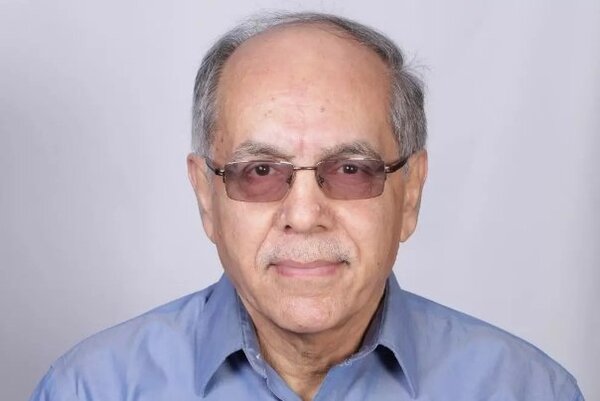
The Foreign Ministry spokesman announced on Sunday that Pakistan's Army Chief, Asim Munir, will arrive in Tehran on Monday. The announcement came after two phone calls between Munir and Iranian Foreign Minister Abbas Araghchi on Wednesday and Saturday.
This will be Munir's fourth visit to Tehran this year. Munir is a figure who has managed to earn the interest, respect, and trust of Trump, while also establishing good working relations with officials in Tehran. There is little doubt that he is now the most important figure among the various mediators. Therefore, Munir's visit to Tehran under the current circumstances is positive and significant news, and it may be the last effort before what the United States calls an "economic operation" and an "economic war."
There are now two main questions: 1. Is he traveling to Tehran on his own initiative? 2. Is he carrying a message from Trump? If the visit is at Trump's request and is intended to convey a message, its significance would be doubled.
At a time when some officials in Tehran have expressed interest in entering another round of negotiations to revive the memorandum of understanding, another question is whether Trump's possible message could encourage a positive process.
The issues that led to the suspension of the MoU's implementation are relatively clear. The main disagreement concerns the two sides' maximalist interpretations of Article 1-the cessation of the war on all fronts-and Article 5-the management of the Strait of Hormuz.
Under Iran's interpretation of Article 1, Israel must halt its attacks on Hezbollah and withdraw its forces from Lebanon. Iran's interpretation of Article 5 is such that its implementation would require Iran to exercise control and sovereignty over the entire Strait of Hormuz.
The United States has different interpretations. It views Article 1 as referring only to the management of hostilities in Lebanon, while interpreting the phrase "management of the Strait in the future" in Article 5 in accordance with the provisions of Article 42 of the UN Convention on the Law of the Sea. Washington argues that the purpose of Article 5 is to restore the Strait to the situation that existed before the war and to manage matters related to traffic regulation and maritime safety.
Meanwhile, we are witnessing two other important developments.
The first concerns reports of a shift in U.S. policy from military operations toward economic operations and economic warfare. American rhetoric over the past several weeks has largely focused on going beyond sanctions, portraying sanctions as merely one component of a new policy. The U.S. is now relying primarily on a naval blockade, while also discussing a possible land blockade and pressuring countries to halt their economic and financial dealings with Iran.
The U.S. Treasury Secretary was expected to clarify on Monday whether Washington intends to eliminate existing sanctions waivers as well and seek to prevent Iran from using the transportation infrastructure of neighboring countries. It remains to be seen what new policies the United States was expected to announce on Monday and what Trump may expect from these countries.
When the United States calls on countries not to cooperate with Iran, what are the limits of such a demand? Does it remain within the framework of sanctions and sanctions-related regulations, or does it go beyond them? Moreover, for example, are Chinese companies that have not previously been sanctioned now going to be targeted?
The other important development concerns U.S. claims that oil tankers are being allowed to pass through the Strait of Hormuz via a route known as the "dark route" near the Omani coast, carrying between 10 and 15 million barrels of oil through it.
If these reports have some basis in reality and, at the same time, pressure from friendly countries has led Iran to allow their oil shipments to pass through the Strait, the effectiveness of the Strait of Hormuz card may have diminished.
The relative stability of oil prices and the $3 decline in oil prices yesterday could be an indication that some of the predictions made by experts close to Iranian officials may have been inaccurate and that the situation may have created difficulties for the country.
Under these circumstances, the question is whether it is possible to correct the situation that emerged following the events of July 7 and the suspension of the MoU's implementation.
Are both sides prepared to make some adjustments and show a degree of flexibility in their positions? If both sides are willing to moderate their maximalist interpretations of Articles 1 and 5 of the MoU to some extent, would it be possible to revive the memorandum and resume its implementation?
The question now is whether, given the emphasis by some figures in the "understanding camp"-particularly President Masoud Pezeshkian, Parliament Speaker Mohammad Bagher Ghalibaf, and former President Mohammad Khatami-on the gravity of the current situation and the need for negotiations, we can hope to see movement within Iran's domestic political landscape toward greater flexibility.
The more important question, however, is: What is happening in the "confrontation camp"? Have any figures in that camp also softened their positions to some degree?
If we take state broadcaster IRIB as one of the indicators, the answer to that question is still no.
Nournews