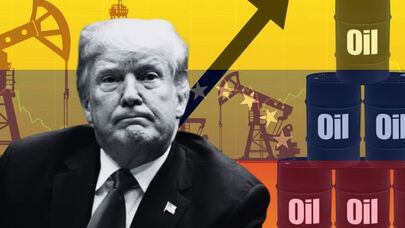
Nournews: In Donald Trump’s account of the war with Iran, America is winning: Iran has been defeated, Washington has the upper hand, the Strait of Hormuz is under U.S. control, and even Tehran’s proposal to reopen the strait is, in the president’s view, a sign of weakness. Rejecting Iran’s offer to reopen Hormuz, Trump described it as a reflection of Tehran’s dire situation, saying that Iran is losing.
But there is a simple question: If everything is going so well, why should Americans have to listen only to Trump to understand the country’s situation?
To answer that question, we need to step away from the White House podium and look at three pictures at the same time: the battlefield, the economy and people’s everyday lives.
In war, power and resilience are not the same thing. Power is about how many aircraft, missiles, warships and other resources a country has at its disposal. Resilience is about how long it can afford to sustain the cost of using that power.
A country may enjoy a significant military advantage in the early days of a war. But if the conflict drags on, ammunition must be replenished, damaged equipment must be repaired, operational costs rise, and the burden eventually reaches the budget, the economy and, most importantly, people’s livelihoods.
That is where the central question of war begins to change. It is no longer simply about who has greater offensive power; it becomes a question of who has the greater capacity to absorb the cost of time.
This is precisely where Trump’s “everything is going well” narrative faces a tougher test.
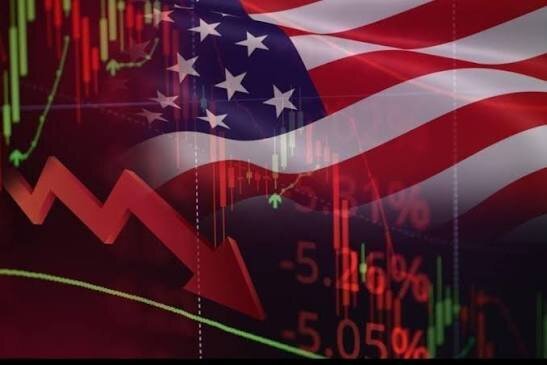
On Wall Street, the initial picture remains relatively strong. The S&P 500 is trading near record highs, which can be interpreted as a sign of market confidence. But Goldman Sachs’ latest report points to a different picture beneath the headline index.
According to Goldman, market breadth — the extent to which individual stocks are participating in the index’s gains — has fallen to its lowest level since the dot-com bubble. The median S&P 500 stock is also about 16% below its 52-week high. In effect, a handful of large companies, particularly in the artificial intelligence sector, continue to account for a significant share of the index’s apparent strength.
Goldman does expect lagging stocks to have room to rally if economic uncertainty eases. But its analysis makes one point clear: The appearance of an index does not necessarily provide a complete picture of the economy.
Just as a handful of large stocks can conceal weakness across parts of the market behind the headline index, a powerful political narrative can also conceal part of the cost of war behind an image of “victory.”
The military cost of the war is a clear example.
The latest estimate from U.S. Central Command, submitted to Congress, puts the cost of the war at roughly $43.6 billion through early September. That figure includes billions of dollars needed to replace expended ammunition and damaged equipment, but does not include the enormous costs of rebuilding destroyed facilities.
More importantly, the estimates have been rising.
In July, the Pentagon put the cost of the war at roughly $37.5 billion. Just weeks later, the new estimate had risen to $43.6 billion. The gap has prompted a number of members of Congress to question the transparency of the Pentagon’s estimates and the war’s actual cost, calling for a more complete accounting of the expenses associated with the operation.
The debate shows that even within the U.S. political system, there are serious questions and disagreements over the true size of the war’s bill.
And that bill does not remain confined to the military budget.
Hormuz means energy. Energy means fuel. Fuel means transportation. And transportation means the prices of goods.
For a truck driver, higher diesel prices do not simply mean paying more for a gallon of fuel. Those costs are passed through to food transportation, agriculture, manufacturing and distribution, and ultimately to the prices of the goods American households buy at stores. Gasoline prices, meanwhile, have a direct impact on everyday life.
From this perspective, a war can impose its costs on the real economy even if the S&P 500 does not fall.
That is where interest rates become important.
If an energy shock keeps inflation elevated, it becomes more difficult for the Federal Reserve to cut interest rates. Higher rates, in turn, increase borrowing costs for households and businesses and put pressure on asset valuations.
This is where the concept of “resilience” moves from being a political slogan to becoming a real variable in the war.
America’s resilience is not simply about whether the Pentagon can continue military operations or whether Trump can continue talking about victory. The question is how long the U.S. economy and American society can absorb the cost of the conflict.
Polling also offers part of the picture.
In a September Market poll, 80% of Americans said gasoline prices had increased over the previous six months. Approval of Trump’s handling of gasoline prices, inflation and the cost of living was also low, while a majority disapproved of his handling of the war with Iran.
These figures point to a broader reality: The government’s experience, the market’s experience and the public’s experience are not necessarily the same.
Trump can stand behind a podium and say that America is winning. The S&P 500 can remain near record highs. A handful of technology giants can continue to mask weakness across much of the broader market within the headline index.
But Americans may be looking at a different scoreboard: gasoline prices, diesel prices, food costs, transportation expenses and interest rates.
That is why measuring resilience in this war requires more than asking how much offensive power America possesses. The more important questions are how much cost it can absorb — and for how long.
Long wars are not decided by weapons alone. They are also decided by the cost of time.
Trump may present his own narrative of power and victory. But ultimately, real resilience is measured in places that cannot be changed with a speech: the budget, energy markets, interest rates, the stock market and people’s daily lives.
Perhaps that is why, to find out whether “everything is going well,” it may be worth asking more than just Trump.
Ask the American people as well — particularly on November 3, when Americans go to the polls for the midterm congressional elections.