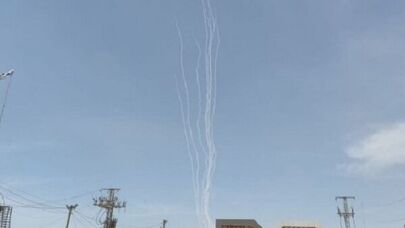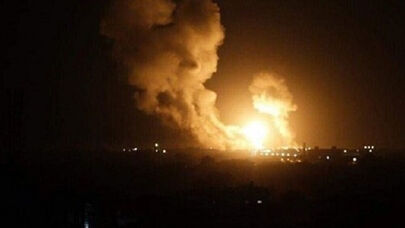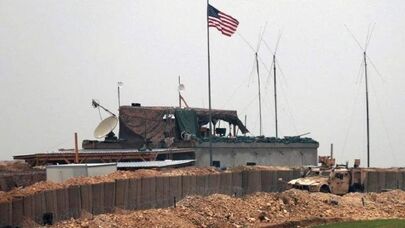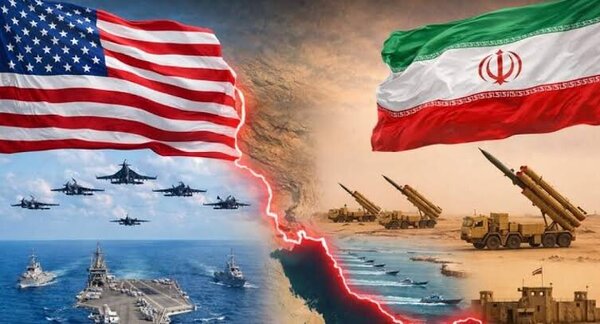
Nournews: The United States began its military aggression against Iran with the assumption that military superiority could enable Washington to impose its political will on Tehran within a short period of time. However, Iran’s all-out resistance, its ability to maintain its retaliatory capacity, the imposition of reciprocal costs on the United States and Israel, and, more importantly, the regionalization of the war have seriously challenged that calculation. In effect, Iran expanded the battlefield beyond a purely bilateral confrontation and shifted the costs of the war to the surrounding region — a development that has also been identified in numerous reports as one of the factors complicating the calculations of Washington and Tel Aviv.
The prolongation of the war, the involvement of multiple fronts and the growing difficulty of predicting how events will unfold have shown that military superiority does not necessarily translate into the ability to impose political will. Following the military aggression against Iran, Trump and Netanyahu have, both implicitly and explicitly, repeatedly pointed to the gap between the initial expectation of a swift operation and the reality of a prolonged, multi-layered war — a conflict that, contrary to initial assessments, moved beyond the confines of a limited battlefield and became a regional issue.
From this perspective, the situation can be described as a “military paradox”: military force was used to compel Iran to accept the political will of the United States, but Iran’s resistance and retaliation increased the costs of using that force for the attacking side — militarily, economically and even in terms of domestic politics — while also expanding the battlefield. As military means alone failed to produce the expected political outcome, indirect tools gained greater importance, ranging from maritime pressure and economic sanctions to restrictions on the aviation network and, potentially, pressure on land corridors in the next phase.
This situation can be viewed through the framework of a “war of resilience” — a conflict in which the scale of military strikes is not the only determining factor; the ability of each side to absorb costs and continue the fight also matters. Within this framework, maritime pressure was also intended to increase the cost of resistance by restricting Iran’s export lifelines. Tehran, however, sought to reverse the logic of that pressure by transferring the risk to vessels, shipowners, insurers, shipping companies and other actors across the transportation chain.
The idea of “blockading the blockade” is based precisely on this logic. The party imposing the blockade should not merely encounter a defensive wall; it should also face part of the cost of maintaining the blockade through a network of surrounding actors. The sharp increase in VLCC tanker rates on the Persian Gulf–China route, which some reports have put at around $1 million per day, is one indication of how the market is pricing the new risk associated with the Strait of Hormuz.
These costs, together with higher oil and refined-product prices, particularly diesel prices, are directly transmitted to the global economy and, especially, to the daily lives of Americans through higher consumer inflation, thereby increasing political pressure inside the United States.
Signs of a shift in the battlefield are now also emerging in the skies. On September 8, the U.S. Treasury Department imposed sweeping sanctions on Iran’s aviation industry, placing 36 entities and targets linked to the sector on its sanctions list. Washington subsequently announced that foreign companies providing services to Iranian airlines could also face sanctions.
The practical consequences of this policy became more apparent from September 23 onward. Reports indicated that Iranian airlines had suspended or canceled flights to countries including the United Arab Emirates and Oman, while restrictions were also reported on routes to Azerbaijan, Georgia and Baghdad, followed by Najaf. At the same time, some routes to Turkey and China have remained operational, although the situation is not uniform across all flights.
From this perspective, what is taking shape could be described as an “indirect air blockade” — not in the legal sense of closing Iran’s airspace, but in the sense of putting pressure on the network required for an international flight to operate: airports, fuel supplies, handling, insurance, ground services and financial settlements.
If this pattern continues, the next question is whether land corridors will become the next target of pressure.
This possibility cannot be regarded as certain, but the logic of multi-layered pressure makes it a possibility worth examining. As maritime routes come under pressure and air routes face restrictions, the importance of Iran’s land borders increases. At the same time, reports have emerged of some Iranian trade being shifted from maritime routes to overland routes, particularly through Turkey.
But there is a fundamental difference here: Iran is not merely a country enclosed within the region’s geography; it is itself an important regional connectivity route.
The International North-South Transport Corridor connects Iran to a network stretching from India and the Persian Gulf through the Caucasus and Russia to Europe. At the same time, east-west routes connect Iran to Turkey, Iraq, Central Asia and surrounding markets. This geographic position allows Iran to offset some of the pressure on one route by activating others.
Therefore, if Washington seeks to shift pressure from the sea and air to land, it will face a different challenge. Restricting Iran’s trade does not only mean restricting Iran; it could also increase the cost and time of trade for countries that rely on Iran’s geography to access other markets.
This is where the possibility of a third paradox emerges.
Just as maritime pressure was intended to impose costs on Iran but a significant portion of those costs was transferred to global energy markets, shipping, and even agriculture, food markets and U.S. bonds, and just as air pressure is now transferring part of the cost to airlines, airports and service companies in third countries, pressure on land routes could also shift costs onto the region’s transit network.
Iran, for its part, is not merely a recipient of pressure in this arena. Its diverse borders, north-south and east-west corridors, rail capacity, northern and southern ports, and access to alternative routes provide Tehran with a range of options. Expanding rail transportation, activating Caspian Sea ports, strengthening the North-South Corridor, and using energy swaps and barter arrangements could help offset some of the pressure resulting from restrictions on maritime and air routes.
At the same time, countries that impose restrictions on Iran out of fear of the costs associated with U.S. sanctions will not necessarily be immune to the costs of their own decisions. Iran’s response does not necessarily have to be military; it could be economic, commercial, transit-related or diplomatic. Any country seeking to restrict its connectivity with Iran would also have to factor into its calculations the cost of losing part of its trade, transit capacity and access to the Iranian market.
There is an important point here: as the pressure rings multiply, the number of Iran’s points of contact with the regional economy does not necessarily decrease; rather, the nature of those points of contact changes. If maritime routes become more costly, land routes gain importance; if air travel is restricted, overland and rail routes become more important; and if one corridor comes under pressure, another corridor gains value.
For this reason, the central issue in this new phase of the war is not simply how many routes the United States can restrict. The more important question is whether it can manage the cost of closing those routes in a way that regional countries — and even the United States itself — are willing to bear.
The experience of the previous two phases has shown that pressure is effective when its costs remain solely on the targeted side. If Iran can transfer part of the cost of that pressure to the surrounding network and, as in previous cases, develop alternative means of response, the instrument of pressure could once again turn into a paradox.
The United States may seek to encircle Iran by sea, air and land. But Iran’s geography and its capacity for strategic initiative present a different reality for such a strategy:
Iran is not merely a destination; it is a route.
And in a war of resilience, the value of a route is sometimes measured not by how much passes through it, but by the cost of removing it from the map.