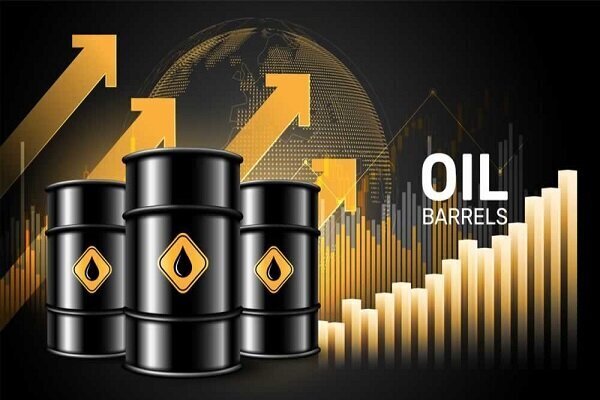
Nournews: Donald Trump’s threats against Iran and Masoud Pezeshkian’s clear and forceful response at the United Nations were more than a war of words between Tehran and Washington. Just hours later, the oil market also reacted to the confrontation. Brent crude rose nearly 4 percent in trading on September 23, reaching $103.08 a barrel—a move indicating that the risk of a prolonged crisis in the Middle East, particularly the situation around the Strait of Hormuz, remains a factor in traders’ calculations.
On the one hand, Trump spoke of negotiations; on the other, he threatened to “destroy” Iran if no agreement was reached. Against this backdrop, Tehran firmly rejected negotiations under pressure and threats, which in Trump’s rhetoric are seen as amounting to accepting Washington’s terms. In his remarks, Pezeshkian stressed Iran’s determination to stand its ground and not surrender to pressure, as it had done over the previous seven months. Reuters also described the positions of the two sides as remaining far apart.
The significance of the episode becomes clearer when these political positions are considered alongside the behavior of the oil market, an indicator that is itself influenced by political developments.
At a time when signs of possible progress in negotiations and the reopening of the Strait of Hormuz were being reinforced in the market by Trump’s messaging and reports in some Western media outlets, oil prices fell, with Brent even dropping below $100 a barrel. But as the actual positions of the two sides became clearer and expectations of a retreat by Tehran diminished, oil prices surged again and moved back above the $100 threshold.
This reaction can be viewed as one of the independent indicators shaping the global assessment of the actual impact of each side’s position in the ongoing crisis. Oil prices are influenced by a range of variables, including supply levels, inventories, regional exports, military developments and traders’ expectations. But the price action sends a clear message: the scenario of quickly removing the risk surrounding the Strait of Hormuz from market calculations has not yet materialized.
This is where the concept of “resilience” extends beyond a purely military notion. In such a war, resilience is not limited to the ability to sustain military operations, withstand economic pressure or engage in repeated rhetoric. It also involves the ability to preserve leverage that can raise the cost of prolonging the crisis for the other side.
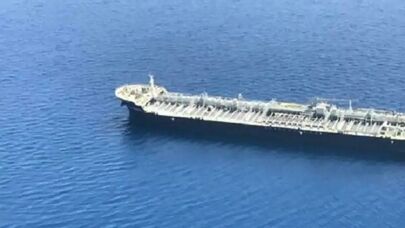
The Strait of Hormuz is a key source of leverage in this equation. Before the crisis, it was one of the world’s most important routes for the transportation of oil and LNG, and any change in the ability, speed or conditions of passage through the strait has a direct impact on the pricing of energy risks. For this reason, the market is responding not merely to the number of vessels passing through the waterway, but to the question of whether the risk of a sustained disruption along this route has been eliminated.
From this perspective, oil’s reaction can be seen as a real-time gauge of market expectations. Whenever the likelihood of an agreement leading to reduced tensions and the reopening of the Strait of Hormuz has increased, part of the “war premium” has been removed from oil prices. Whenever the likelihood of continued confrontation has risen, that risk has returned to prices.
Against this backdrop, Trump’s and Pezeshkian’s statements are not simply two opposing political positions; they represent two different narratives about the future of the crisis. Washington’s narrative is based on maximum pressure and forcing Tehran to accept U.S. terms, while Tehran’s narrative centers on resisting pressure and rejecting an agreement reached under threat.
The oil market, however, looks at these two narratives through a different metric: Will this confrontation ultimately lead to the sustained reopening of the Strait of Hormuz?
But resilience in this equation is not limited to the capabilities of governments and militaries; people are also a key part of it. In the United States, a sustained rise in energy prices can turn from a market issue into a social and eventually political issue, because fuel costs are directly reflected in household budgets, transportation expenses and the prices of goods.
An NPR/PBS News/Marist poll released on September 23 illustrates this link in the U.S. electoral environment. Among registered voters, the economy and gas prices are among the issues attracting attention ahead of the midterm elections, while voters differ in their assessments of which party can better manage gasoline prices. The issue has also drawn attention among independent voters.
Although these data alone do not establish a causal relationship between oil prices, war and electoral behavior, they show that fuel prices are a real issue in the current U.S. electoral environment. In other words, rising energy costs are not merely an economic indicator; they are an important part of voters’ everyday experience.
From this perspective, U.S. resilience also has a social ceiling. The Washington government may be able to absorb the military and economic costs of a crisis for a period of time, but if higher oil prices translate into more expensive gasoline, higher transportation costs and greater pressure on household budgets—as is now happening—the issue moves from the realm of foreign policy into domestic society. At that point, the question is no longer simply how long the U.S. government can sustain pressure on Iran; it is how much of the cost of that policy American society is willing to bear.
This is where the Strait of Hormuz, the oil market and U.S. elections become interconnected. The longer the risk of continued disruption in the Strait remains, the more likely the war premium is to persist in oil prices. And the more those prices feed through into fuel and the cost of living, the greater the social pressure on policymakers. This does not necessarily lead to any particular electoral outcome, but it shows that the resilience of both sides will not be tested only on the battlefield; it will also be tested at the gas pump, in household budgets and ultimately at the ballot box.
The main message of September 23, therefore, could perhaps be summarized as follows: At the United Nations, Trump spoke of U.S. power, while Pezeshkian spoke of Iran’s refusal to surrender and its determination and capacity to continue resisting and reject imposed terms. The oil market, meanwhile, assessed the two sides’ positions in terms of their ability to translate those positions into action and, with another surge in prices, priced in the risk of a prolonged crisis. But if that risk persists, the test of resilience will increasingly shift from the U.S. government to the American public—where energy prices are no longer merely an economic figure, but part of the cost that society must decide whether it is willing to bear ahead of the congressional midterm elections.
Under such circumstances, even if Trump mobilizes all of his personal and aligned media resources to downplay the impact of current conditions on the elections—or to argue that the election results will have no bearing on his decisions—the political, social and economic realities of the U.S. domestic environment may impose a different set of constraints on him, one far removed from the confrontational rhetoric he used in his recent address to the United Nations.