
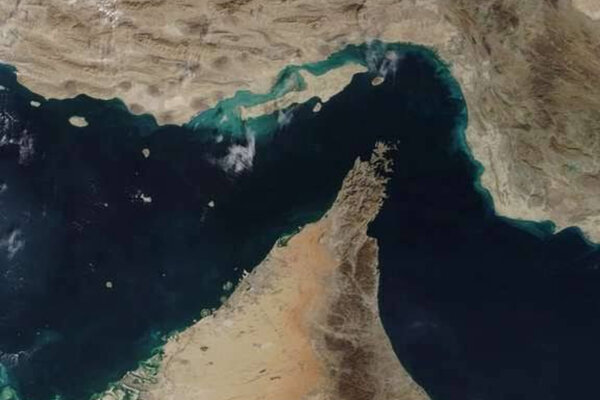
According to Sedaye Iran, the online newspaper affiliated with the Office of the Supreme Leader, the key question is: Why will the Strait of Hormuz never return to its pre-war status?
Before the recent conflict, a regional security and deterrence equation had taken shape in West Asia. Despite their rhetoric and threats, the anti-Iran bloc in the region generally respected Tehran's red lines and managed their security interactions with Iran within those boundaries. That balance of power, however, was effectively shattered by the two recent conflicts-the 12-day war and the 40-day war. Although the American-Israeli coalition has suffered significant setbacks, no new security framework has yet emerged that can ensure Iran's security and remove the threat of future war.
Drawing lessons from the 40-day war, the Islamic Republic of Iran has revised its strategic calculations. The implementation of a regional warfare strategy-targeting any location from which aggression against Iran originates-combined with the experience of conducting precise and deep strikes against enemy targets, has shifted Iran's doctrine away from the strategic restraint of the past three decades toward a more assertive strategy based on strength. Recent developments, the article argues, provide evidence of this shift.
Iran now believes that the most effective way to prevent future wars is to establish a new regional security architecture and deterrence equation based on the strategic realities that emerged after the 40-day conflict.
Within this framework, the Strait of Hormuz is no longer viewed merely as a bargaining chip or a source of leverage. Instead, Iran sees it as the central pillar of a new regional security order in West Asia. Under this concept, if an extra-regional power attacks Iran, it must also bear the consequences of that aggression-and those consequences will not necessarily be limited to military action. Any measure capable of imposing significant costs on an adversary may become part of Iran's broader military and security strategy.
From this perspective, the Strait of Hormuz has become a critical focal point in shaping a security architecture centered on Iran's national interests. The performance of Iran's armed forces during the 40-day war, together with their control over this strategic waterway, is portrayed as having enhanced Iran's strategic leverage and enabled it to redesign its regional security posture.
For this reason, Iran continues to emphasize that the Strait of Hormuz will never return to the conditions that prevailed before the 40-day war. The recent conflict, according to the article, proved that three decades of restraint failed to deter aggression. In the regional environment, it argues, only those with greater power to enforce their will can effectively defend their interests, and the war demonstrated that Iran possesses such capability.
Accordingly, the Strait of Hormuz is no longer considered a temporary instrument of pressure but rather the cornerstone of Iran's future security architecture and deterrence strategy. Therefore, not only the American-Israeli coalition but the international community as a whole should accept that the pre-war status quo in the Strait of Hormuz has come to an end. The Strait, the article concludes, will not return to its former state. Its unique geostrategic position will become an integral component of Iran's military and defense strategy, intended to deter any future violations of Iran's land, airspace, or territorial waters.
The article concludes by asserting that Iran will not relinquish its role in the Strait of Hormuz. It argues that the United States should recognize this as a permanent reality and abandon expectations that the region's previous security order can be restored. In its view, a new era of competing wills, evolving security arrangements, and new strategic realities has emerged-and Iran intends to build that new order around the concept of Hormuz.
Nournews