
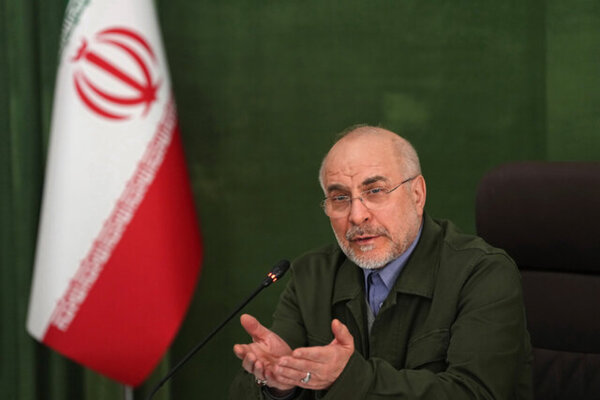
Nournews: Mohammad Bagher Ghalibaf said in a televised interview:
"I extend my condolences to the dear and noble people of Iran, to the aware, insightful, courageous, and timely nation, and to all families who lost their loved ones, children, and friends."
The People Have the Right to Know
"God willing, we will act and behave in a way that we are not indebted to these proud and honorable people. I thank Almighty God for giving me the opportunity today to speak with my dear people. Of course, it would have been better to speak to them sooner, but truly the heavy workload and pressures allowed me this opportunity only now. I believe that knowing and being informed is the right of the people."
Regarding the war situation and Iran's position, Ghalibaf said: "The third imposed war also began through American deception in the middle of negotiations. In these wars, several commanders, security forces, and our martyred Imam were assassinated, revealing their criminal nature."
He added: "We used the experience of the 12-day war. During that war, there was a 14-hour delay in our response. However, in the third imposed war, despite the martyrdom of the Commander-in-Chief, the IRGC commander, and the Chief of Staff-which could have caused disruption-our reaction was carried out in the shortest possible time and with precision."
We Have a Strong Structure
Ghalibaf stated: "We benefited from past experiences and we have a strong structure. Our great Imam and our martyred Imam always said: do not think that the Revolution, Iran, and the country depend on us; rather, they depend on God and the people, and even in our absence, affairs will continue."
He continued: "A few days before his martyrdom, during the anniversary of the Revolution's martyrs, our martyred Imam said: if we are not present, God will raise others. Today, after 49 days since the war, we understand the meaning of these words. The people themselves rose, becoming both Imam and followers, and God guided them."
Ghalibaf added: "I had repeatedly stated that if war occurred, in the offensive domain-both quantitatively and qualitatively-and in planning, we were significantly stronger than in the past. The enemy did not believe this, but saw it in the battlefield."
We Shot Down Around 180 Drones
He continued: "Today our people are more committed than in the previous war; nearly 50 nights now, people have been present in the streets daily. In the technical field, we struck approximately 180 drones, something that was not possible in the previous war in terms of air defense capabilities. All these developments occurred within a few months."
He added: "In the future, I will explain what kind of miracle occurred within the Revolution and under the leadership in terms of symmetrical warfare and scientific advancements. Everyone witnessed it, and even the enemy acknowledged it. The F-35 issue was not accidental; it was the result of efforts and operations across multiple technical and design dimensions. When a missile exploded near that aircraft (F-35), the enemy realized what capabilities we possess and the direction in which we are moving."
We Are Winning on the Battlefield
Ghalibaf stated: "From the first war to the second, planning was carried out and capabilities were demonstrated, but this does not mean that we are militarily stronger than the United States. Clearly, American resources, equipment, and financial capabilities exceed ours, as they have continuously engaged in aggression worldwide and have more experience than us. The Zionist regime, which acts as America's agent in the region, also possesses significant power."
We Pushed Back the Enemy Through Planning and Preparedness
He continued: "Sometimes our dear people say that we destroyed them. No-we did not destroy them. We are winning on the battlefield in this war. Equipment, resources, and money certainly influence war and victory, but not always. We fought an asymmetric war in such a way that, through our planning and preparedness, we pushed back the enemy. The enemy had money and resources, but did not act correctly in planning. Strategically, they made wrong decisions. They misjudged our people, just as they miscalculated in their military planning."
Trump Requested a Ceasefire
The Speaker stated: "The U.S. government claims 'America First,' but in practice it showed that 'Israel First' is what truly matters to it, because it makes decisions based on incorrect Israeli intelligence."
He added: "Sometimes I hear from our dear people and even from national media that they say we destroyed all their military power, so we should proceed and destroy the rest and avoid negotiations. However, we must pay attention to the fact that battlefield superiority is indeed in our hands, and this is precisely why Trump requested a ceasefire."
Why We Say We Were Successful
Ghalibaf explained: "To determine why we say we were successful, we must examine the enemy's objectives. If the enemy fails to achieve its goals, it has been defeated-because it was the aggressor. The enemy's goal was to force Iran into submission, and it spoke of a two- or three-day war. But we fought for 40 days, and after 40 days the enemy was forced to establish a ceasefire. Therefore, it failed to subdue us."
He continued: "The enemy believed Iran was like Venezuela and assumed that after a few days it could seize our oil and allow anyone wishing to transport oil from the Persian Gulf to do so."
He added: "In the early days, the enemy claimed it would eliminate Iran's missile capability through bombardment, but later realized the intensity and precision of our firepower. No matter how much it bombarded, it could not eliminate our offensive capability. In the previous round, we were vulnerable in our launchers, but this time the strength and diversity of our firepower became evident."
The Enemy Planned a Ground Attack but Failed
Ghalibaf stated: "In Isfahan, they faced a disaster worse than the Tabas incident. The enemy intended to support counter-revolutionary forces from both our western and eastern borders, and even admitted supplying them with weapons. Despite all attempts, it failed. The enemy sought internal unrest before and during the war but was unable to achieve this. It also planned a ground attack but could not carry it out."
He continued: "The enemy attempted to open and seize control of the Strait of Hormuz and invited NATO and others around the world, but no one responded, and it failed to do so on its own. Therefore, it is clear that we were victorious in this arena, which even the enemy acknowledges. However, this is different from claiming that we destroyed their army."
The Battlefield, the Streets, and Diplomacy Work Together
The Speaker emphasized: "Today we possess strength in the battlefield, in the streets, and in diplomacy. There should be no separation among these three arenas-they are one unified field."
He added: "Today we have achieved success in the military sphere. At times, proper maneuvering and movement are needed in these arenas. Currently, we are at a maximum point in the military field, and the presence of people in the streets has enabled us to stand firmly in the battlefield."
He stressed: "Today the enemy cannot impose its will on us. We must also ensure that the rights of the nation-achieved in the military sphere-are secured legally and politically. This is where powerful diplomacy must take the lead."
Negotiation Is a Method of Struggle
Ghalibaf reiterated: "The enemy sought a ceasefire, and if we accepted it, it was because they agreed to our demands. The enemy's entire effort was to impose its demands on us. It is important for us to secure our rights, and this is why negotiation is a method of struggle."
He continued: "I ask the people to maintain their presence. Our main goal must be to raise the flag of victory and secure the rights of the nation. Rest assured that there will be no retreat in diplomacy, and we will move forward within this framework. The Iranian nation has demonstrated the meaning of national will and determination to the world."
We Have No Trust in the Enemy
He stated: "As long as we were pursuing matters in the battlefield and military sphere, we stood firm-and we continue to stand firm today. If the enemy makes any mistake at any moment, we are ready, because we have no trust in the enemy. Even at this very moment, while we are sitting here, it is possible that they could start a war again. Therefore, our armed forces are fully prepared."
He added: "When the enemy could not impose its will through military force, it began sending messages through various countries. The enemy transmitted a 15-point proposal to Iran through multiple channels. Eventually, this proposal was delivered via Pakistan, through the Prime Minister and the Chief of Army Staff."
He said: "This matter was carefully reviewed in the Supreme National Security Council."
Trump's Messages Were Delivered Through Various Countries
Ghalibaf explained: "This occurred around the 36th or 37th day of the war. While we continued our operations in the battlefield, Trump issued ultimatums and threatened to target infrastructure. We warned that such actions would be a mistake and that if our infrastructure were attacked, we would respond in kind."
He added: "They threatened to create 'hell' for us. We responded that if they created hell, it would first affect American families and the rest of the world. Yes, we would also suffer damage-but they would suffer first. All of this caused Trump to become passive and unable to make decisions, leading him to send messages."
How the Negotiations Began
He stated: "The 15-point proposal was officially delivered through Pakistan. After reviewing the matter, we finalized a 10-point framework that included our demands, objectives, and the rights of the nation. We rejected their 15 points and insisted on our 10 points. We told them that if the United States had comments on these 10 points, they could be negotiated."
He added: "At that time, we had not yet spoken directly with the Americans."
Pakistan conveyed these points to the United States, which later proposed a nine-point response. However, Iran insisted on its ten points, and eventually the United States agreed to discuss them.
He explained: "For negotiations to begin, they proposed a temporary ceasefire. Even now, they say that only a few days remain until the ceasefire expires, but some of our conditions have not yet been met."
One of Our Conditions Was That Hezbollah Must Also Be Included in the Ceasefire
Ghalibaf stated: "One of the points in our ten conditions was that Hezbollah must also be included in the ceasefire. Hezbollah has been fighting the Zionist regime for years, but in the recent war, Hezbollah entered the conflict because of the Islamic Republic. The resistance front came to support Iran; therefore, the ceasefire had to include them as well."
He explained: "When Pakistan's Prime Minister announced the ceasefire invitation on social media, Lebanon and Hezbollah were also mentioned. There were differing interpretations at first, and it took time, but eventually a ceasefire in Lebanon was announced-although it was not implemented properly."
He added: "The Americans requested that if the ceasefire in Lebanon were established, we should normalize maritime traffic through the Strait of Hormuz."
The Strait of Hormuz Is Under Iran's Control
Addressing the people, he said: "Dear people of Iran, the Strait of Hormuz is under the control of the Islamic Republic of Iran. At the same time, we want people around the world-and those who did not act against us in this war-to pass safely through the Strait. We do not intend to pressure the people of the world or expand insecurity."
He continued: "When the United States attempted to send minesweepers after detecting mines, we stood firm and considered it a violation of the ceasefire. We warned that if they proceeded, we would strike, and the situation nearly escalated into confrontation before they withdrew."
Moments of Confrontation During the Islamabad Negotiations
Ghalibaf described: "During the negotiations in Islamabad, I received a call informing me that an enemy minesweeper had reached a position where, if it advanced even slightly, it would be targeted by our missile. I told the American delegation that if their minesweeper moved forward even slightly, it would certainly be fired upon."
He added: "They requested 15 minutes to issue a withdrawal order, which they did. Afterward, I received confirmation that the minesweeper had returned. Therefore, if maritime traffic is currently taking place in the Strait of Hormuz, it is because the Strait is under our control."
If the Blockade Continues, Traffic Will Be Restricted
He warned: "If the United States does not abandon the blockade, traffic through the Strait of Hormuz will certainly be restricted."
He emphasized: "It is impossible for others to pass through the Strait while Iran is prevented from doing so. If such a blockade continues, limitations will be imposed."
We Do Not Trust the United States
Ghalibaf said: "In Islamabad, the American representative said he had come with goodwill for lasting peace. I replied that although we came with goodwill, we did so at the height of distrust. Even now, as I sit here, I have no trust in you. Your first task must be to build trust."
He added: "We told them clearly that we were not war-seekers, but we were ready for war-and still are. We trust in divine support and in the strength of the Iranian people."
Negotiations Began Only After Trump Requested a Ceasefire
He stated: "We held no negotiations until 48 hours before the ceasefire. Negotiations began only after Trump publicly requested a ceasefire."
He added: "The Supreme National Security Council finalized ten points, and the Leader approved the basis and conditions for negotiations. All of this occurred during the final 48 hours of the war."
Our Policy Is Step-by-Step Commitment
Ghalibaf emphasized: "Our policy is step-by-step action and commitment in return for commitment-one step by them, one step by us. It cannot be that we fulfill our obligations while they fail to do so."
He added: "There are still disagreements in several areas, particularly regarding nuclear matters and the Strait of Hormuz, but we remain firm on our positions."
We Seek a Lasting Peace
He concluded: "What matters to us most is our distrust of the United States. We seek a lasting peace-one that guarantees that war will not be repeated. There has long been a cycle of war, ceasefire, and renewed conflict, and this cycle must be broken."
He added: "The Iranian people demonstrated national unity and determination. We will continue pursuing these goals through strength, logic, and persistence, until the rights of the nation are fully secured."
Nournews