
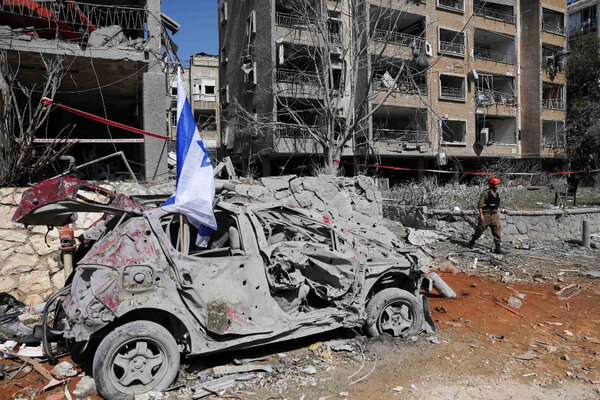
Following Operation Al-Aqsa Flood, Benjamin Netanyahu advanced the doctrine of "neutralizing threats" and relied on the "iron fist" approach, claiming he could eliminate all centers of threat against Israel through a concentrated military campaign. With direct US support and cooperation from several European countries, this strategy quickly evolved into a multi-front war project extending from the Gaza Strip and the West Bank to Lebanon, Syria, Iraq, Yemen, and even Iran.
The outcome of this approach was widespread destruction, with tens of thousands killed, hundreds of thousands wounded, and millions displaced. Yet at the strategic level, it produced the opposite result. Contrary to the claim of ending the cycle of threats, each military operation triggered a new wave of escalation. As a result, after each round of conflict, Israel was forced to accept ceasefires, ceasefires that did not stem from a position of dominance, but rather from battlefield attrition and the failure to achieve declared objectives.
In practice, the "iron fist" doctrine suffered from a fundamental miscalculation: the assumption that resistance could be eliminated through military pressure alone. Resistance, however, is not purely a military phenomenon; it is rooted in social, political, and identity-based structures. This reality led not to the elimination of threats, but to their multiplication and expansion across a broader geography.
Censorship, Narrative Construction, and Irrefutable Field Realities
One of the main pillars of Israel's wartime policy has been narrative control and media censorship. The government of Benjamin Netanyahu attempted to present a unilateral portrayal of wars, highlighting achievements while concealing losses. Within this framework, casualty figures were minimized, and many losses were reclassified under terms such as "injured" or "brain trauma," while claims of the complete destruction of adversaries were repeatedly asserted.
However, battlefield developments challenged this narrative. In Gaza, despite proposals such as Donald Trump's "Peace Council," Hamas was not eliminated and instead retained its governance capacity and social legitimacy. This demonstrated that the strategy of total eradication lacks practical grounding.
In Lebanon as well, Hezbollah, contrary to official claims, not only was not weakened but entered the field with greater initiative across ground, aerial, and operational dimensions. Its popular base was so strong that even Western-aligned governments were unable to implement disarmament efforts against it.
As a result, the gap between official narratives and battlefield reality gradually eroded domestic and international trust in Israeli accounts. In the era of free information flow, censorship can no longer obscure realities, turning this into a major challenge for policymakers.
Iran and Resistance Network; Redefining the Balance of Power
Within this trajectory, Iran's role in reshaping regional equations has become increasingly prominent. Following the 12-day war and joint Israeli-US aggression, claims were made regarding the destruction of Iran's military capabilities, claims that were confronted by entirely different realities.
Iran's national unity, social and economic resilience, and particularly its missile, drone, and air defense capabilities not only refuted these claims but altered the equation to such an extent that many observers viewed the outcome of conflicts as dependent on decisions made in Tehran. Iran's control over the Strait of Hormuz, one of the world's most critical energy chokepoints, has further enabled it to play a decisive role in global equations.
At the same time, the involvement of resistance groups in Iraq and Yemen, along with reports of emerging cells in Syria, indicates the expansion of a coordinated resistance network. A defining feature of this network is the establishment of a "joint operations room" and reliance on broad popular support, factors that have significantly enhanced its operational flexibility.
These developments have fundamentally challenged Benjamin Netanyahu's claim that security can be achieved through the destruction of resistance, demonstrating instead that resistance has not weakened but is undergoing structural regeneration and reinforcement.
In parallel, several European countries have in some cases refused to allow military flights or arms transfers, and the normalization process with Arab states, once a key objective of Donald Trump and Benjamin Netanyahu, has effectively been removed from the agenda.
A Shift in Regional Architecture
In contrast, the idea of a "New Middle East" is now being shaped not according to Washington and Tel Aviv's designs, but rather based on the conditions set by the Axis of Resistance. A clear example is the Islamabad negotiations under Iran's ten-point framework and the realization of a regional ceasefire.
In this context, the United States and Israel, despite continuing threats of sustained conflict, have reverted to their traditional model of conflict management. However, this return occurs under fundamentally different conditions, conditions in which the Axis of Resistance holds the initiative and is capable of imposing its terms on regional equations.
Ultimately, what has become most evident is the strategic failure of a project that began with the goal of eliminating threats but has, in practice, led to their strengthening. This failure has imposed heavy human, financial, and reputational costs on Israel and its supporters and has ushered regional dynamics into a new phase.
NOURNEWS