
The official pointed to the significant rise in the prices of oil and its derivatives, chemical fertilizers, and other goods following the war imposed on Iran by the United States and Israel.
He added that the increase in prices stands in contrast to the tens of billions of dollars in financial damage and the irreparable human costs borne by Iran, and that part of these price increases should now be used to offset the costs of the imposed war.
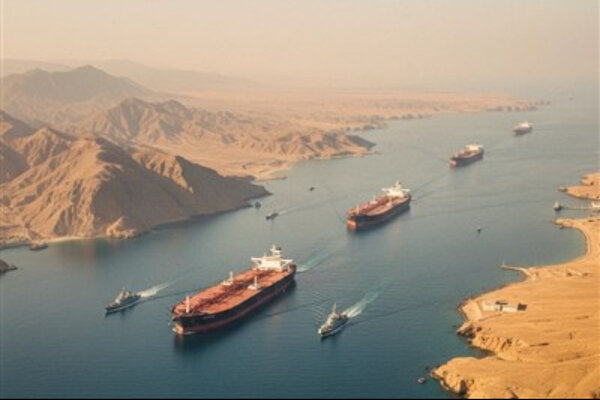
The official explained that more than 100 vessels of various nationalities have so far submitted written requests to transit the strait under the new protocol, and that these requests are currently under review and being prioritized.
Referring to the specific security conditions governing the strait and the possibility of unforeseen developments, the official emphasized that the number of vessels that can safely transit under the new protocol is currently limited. Therefore, applications will be ranked based on political, economic, and security priorities.
State of Alert
This development comes after the announcement of a ceasefire between Tehran and Washington following 40 days of military escalation, which included reciprocal strikes and the closure of the Strait of Hormuz, before regional and international mediation efforts intensified to contain the conflict.
This "fragile" calm has temporarily reduced tensions but has not resolved concerns over navigation and energy supply, as a state of alert persists and no long-term guarantees exist to prevent a renewed escalation.
In this context, attention is turning to Pakistan's capital, Islamabad, where talks between the two sides are scheduled to begin tomorrow following the ceasefire agreement. These negotiations are expected to help stabilize the ceasefire and pave the way for broader discussions covering outstanding issues, including the nuclear program and arrangements concerning the Strait of Hormuz.
Observers believe the success of this round could mark a turning point toward lasting stability, while its failure could signal a swift return to escalation.
NOURNEWS