
Nournews: Iran's geopolitical position in the Persian Gulf, particularly its control over the Strait of Hormuz, is an undeniable reality in global energy security calculations. Under international law, freedom of navigation in international waterways remains valid as long as the security and territorial integrity of coastal states are not threatened. In the event of a direct threat, a coastal state may restrict or even temporarily close transit routes to safeguard its national security.
Within this framework, claims that closing the Strait of Hormuz would be illegal-without considering the threat environment-lack full legal grounding. Iran has always considered the security of the Persian Gulf, the Sea of Oman, and surrounding waterways part of its regional responsibility and has participated in global energy security in good faith. However, this cooperative approach does not mean relinquishing the right to legitimate self-defense-a right that can be operationalized in the event of a threat.
Energy dependence and the vulnerability of war advocates
More than 20 percent of the world's oil passes through the Strait of Hormuz daily, a figure that indicates any disruption would have immediate and widespread consequences for global markets. Even Iran's recent naval drill in the region pushed oil prices up to $71. Some estimates suggest that in the event of a closure of the strait, prices could rise to as much as $150 per barrel.
Under such circumstances, military threats against Iran by certain factions in the United States, the Zionist regime, and parts of Europe do not align with their economic realities. The U.S. economy faces a trade deficit of hundreds of billions of dollars, slower-than-expected growth, and public dissatisfaction with living costs. Europe, grappling with an energy crisis stemming from the Ukraine war and internal divisions within the EU, is also in no position to absorb another energy shock.
From this perspective, military threats are not a deterrent tool but rather a factor that would intensify economic crises in the very countries promoting them.
The Zionist regime and the costs of escalation
Meanwhile, the provocative role of hardline factions in Tel Aviv is also noteworthy. In recent months, they have sought to highlight scenarios of confrontation with Iran in order to push Washington toward hardline options. However, recent tensions have shown that the Zionist regime's economy is also vulnerable to heightened security risks.
Reports indicate that the dollar and euro have strengthened against the shekel amid rising tensions, signaling concern in the regime's financial markets. Moreover, the economic consequences of the recent 12-day war have not yet been fully resolved, and additional pressure could further expose the fragility of its economic structure.
Therefore, escalating tensions not only undermines regional security but also imposes heavy financial and currency costs on its architects.
A global shock in case of strategic miscalculation
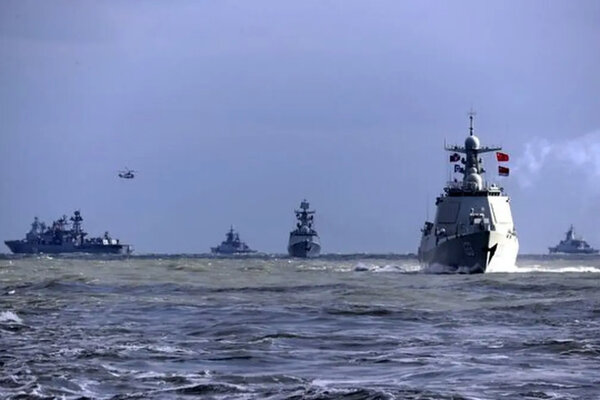
The reality is that Iran's naval and missile capabilities can alter the flow of global energy transit. Recent drills and active participation in joint naval exercises with other countries demonstrate Tehran's operational capacity in this domain.
If threats materialize and Iran is forced to use its deterrent tools, energy markets will face an astronomical surge-leading to global inflation, recession in industrial economies, and crises in capital markets. In such a scenario, the concept of a "limited strike" would lose its meaning, and reactions would take on regional dimensions.
Therefore, strategic rationality requires the international community to focus on de-escalation and strengthening diplomatic pathways instead of supporting unilateral approaches. Any miscalculation regarding Iran could become the Achilles' heel of the global economy.
NOURNEWS