
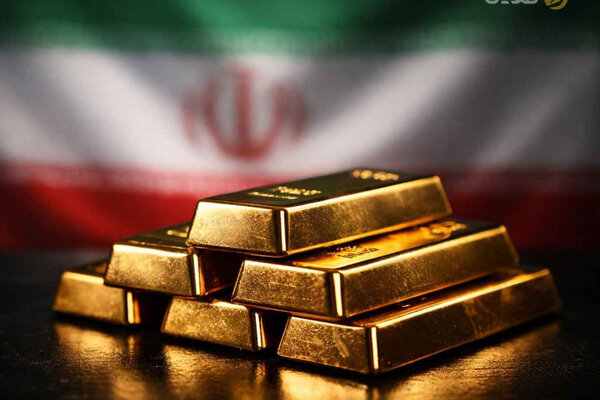
Rising geopolitical uncertainties, tightening sanctions and instability in foreign exchange markets have once again brought gold to the center of global monetary policy. According to the latest data released in 2024 by the World Gold Council and the International Monetary Fund, central banks have continued accumulating gold reserves. In this context, Iran, with approximately 320.7 tons of official gold, ranks between 20th and 25th in the world - a position that, while significantly behind the major powers, remains notable at the regional level and within the framework of a sanctions-constrained economy.
Based on the reported figures, the United States tops the table with 8,133.5 tons - a striking lead that reflects the historic role of the dollar and the country's gold backing within the international financial structure. It is followed by Germany with 3,351.5 tons, the International Monetary Fund with 2,814 tons, Italy with 2,451.8 tons and France with 2,436.9 tons. Russia, holding 2,329.6 tons, and China, with 2,235.4 tons, have in recent years steadily increased their reserves in an effort to reduce dependence on the dollar.
Among Asian economies, Japan holds 846 tons and India 789.4 tons - countries that over the past decade have increased gold's share of their reserves as part of a diversification strategy. Comparing these figures with Iran's 320.7 tons shows that the gap with the leading powers remains wide. Nevertheless, Iran stands ahead of many developing countries and has managed to create a level of secure backing for its central bank's balance sheet.
For Iran, the importance of gold reserves is not merely numerical; it is strategic. Under conditions of restricted access to the international financial system, gold - as an asset free of credit risk, highly liquid and a hedge against currency risk - plays a complementary role in managing monetary stability. The experience of recent years suggests that whenever external pressures have intensified, policymakers' attention to hard assets such as gold has likewise grown stronger.
From the perspective of gold's share in the composition of official reserves, some countries, despite holding smaller volumes, allocate a higher percentage of their assets to gold. Therefore, absolute ranking alone is not the sole measure; the ratio of gold to total reserves, along with diversification policies, carries added importance. Within this framework, by maintaining a mid-tier position in the global table, Iran could - should economic conditions improve and foreign currency revenues rise - pursue a path toward strengthening its strategic reserves.
Ultimately, official gold is not only a symbol of financial stability but also an indicator of governments' room for maneuver in the face of external shocks. Iran's position in the second decile of the global ranking conveys a dual message: on the one hand, the distance from the leading economies is clear; on the other, the capacity for advancement exists if structural reforms and international openings materialize.
NOURNEWS