
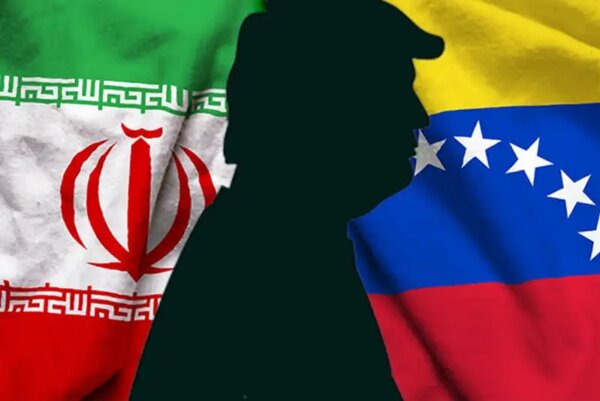
The US military attack on Venezuela and recent developments in that country, including the abduction of its legitimate president by US troops, coinciding with Donald Trump's explicit threats against Iran, have once again focused attention on the US president's behavioral pattern in confronting international crises. Experience shows that Trump is less a classic military strategist than a politician who relies on "shock," "threats," and "ambiguity" as his primary tools for advancing his objectives. Within this framework, the question must be asked: could Iran become the next target of an attack similar to Venezuela, or not?
The first point concerns the fundamental differences between Iran and Venezuela in security calculations. Venezuela, despite its vast energy resources, lacks effective regional deterrence and the ability to deliver either symmetric or asymmetric responses to the United States. By contrast, Iran not only possesses significant military capabilities, but also maintains a network of allies and strategic depth across the region-factors that would turn any direct military action against it into a multi-dimensional, uncontrollable crisis. From this perspective, Venezuela represents a "low-cost target" for Trump, while Iran constitutes a "high-risk scenario."
Second, the nature of Trump's recent threats against Iran deserves close attention. His focus on how Tehran handles protests is less an indication of a decision to take military action than an effort to construct a political and media narrative. By highlighting so-called human rights and humanitarian issues, this narrative lays the groundwork for intensified diplomatic, sanctions-based, and psychological pressure. This pattern has been seen before in US confrontations with non-aligned governments-a pattern that does not necessarily lead to war, but does impose heavy political and economic costs.
At a deeper level, the military threat in Trump's doctrine functions more as a "playing card" than a "final decision." He has repeatedly shown that he uses threats as a tool for extracting concessions-one that places the other side under uncertainty and psychological pressure without incurring real costs. In Iran's case, such threats may be aimed at influencing internal calculations, deepening social divisions, and sending a deterrent message to regional actors.
Nevertheless, the scenario of a direct military attack on Iran still faces serious obstacles. Any such action could plunge the region into a cycle of instability whose consequences would not be confined to Iran alone. Global energy markets, the security of US allies in the region, and even Washington's standing in the international system would all be affected by such a decision. These costs-especially amid domestic political competition in the United States-serve as a deterrent to entering a full-scale war.
It can therefore be said that while Iran remains on Trump's list of maximum-pressure targets, it is not the next candidate for a Venezuela-style direct military attack. What appears more likely is the continuation-and even intensification-of a hybrid war against Iran, one that spans media, economics, diplomacy, and military threats. In this framework, the threats are less a prelude to an attack than part of a battle of narratives and calculations-a battle whose main arena is not the skies, but minds and decision-making processes.
NOURNEWS